
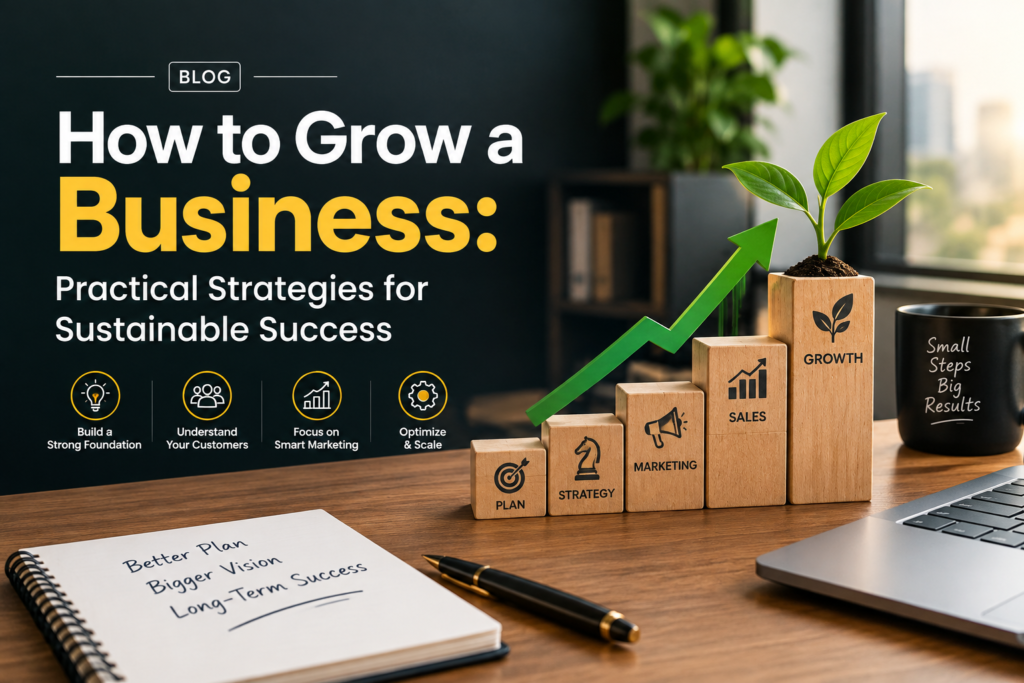
Growing a business is more than increasing sales for a few months. True growth means building a company that can attract customers, deliver consistent value, manage its finances, develop its team, and adapt when the market changes. Whether you run a small local shop, an online store, a freelance service, or an established company, growth requires clear goals and steady action.
Many business owners focus only on finding more customers. Customer acquisition is important, but it is only one part of the picture. A business can grow faster and more sustainably by improving customer loyalty, strengthening operations, managing cash flow, and creating a strong brand. The best growth strategies are not always expensive or complicated. Often, they begin with understanding customers better and doing the basics exceptionally well.
Understand Your Customers
Every successful business starts with a clear understanding of its customers. If you do not know who your customers are, what problems they face, and why they choose your business, marketing becomes guesswork.
Start by identifying your ideal customer. Consider their age, location, interests, income level, buying habits, and biggest needs. If you sell products, ask what customers value most: price, quality, speed, design, convenience, or trust. If you provide services, find out what outcome customers want and what concerns they have before making a purchase.
Customer feedback is one of the most valuable tools for growth. Ask customers simple questions such as:
- What did you like most about our product or service?
- What could we improve?
- How did you hear about us?
- Would you recommend us to someone else?
- What problem did we help you solve?
- What would make you buy from us again?
Reviews, messages, surveys, support calls, and in-person conversations can reveal useful patterns. For example, a restaurant may learn that customers love its food but leave because of slow service. An online store may find that people add products to their cart but do not complete payment because delivery charges are unclear. These insights show where improvements can create immediate results.
Create a Clear Value Proposition
Customers have many choices, so they need a clear reason to choose your business. This reason is called a value proposition. It explains what you offer, who it is for, and why it is better or different from alternatives.
A weak message might say, “We sell high-quality products.” Almost every business says this. A stronger message is specific: “We deliver fresh, affordable home-cooked meals to busy office workers within 30 minutes.” This statement identifies the product, the target customer, the key benefit, and the promise.
Your value proposition should appear across your website, social-media profiles, advertisements, product pages, and sales conversations. When customers understand your offer quickly, they are more likely to trust your business and take action.
A strong value proposition does not mean claiming to be perfect. It means being clear about the particular value you provide. A small business may not compete with a large company on price or variety, but it may win through personal service, local knowledge, custom solutions, or faster communication.
Improve Your Marketing Strategy
Marketing is how people discover, understand, and remember your business. It should not be treated as a one-time activity. Consistent marketing helps build awareness and brings new customers over time.
Begin by choosing the channels your customers already use. For some businesses, this may be Instagram, Facebook, YouTube, LinkedIn, Google Search, email, or WhatsApp. A local service business may benefit from Google Business Profile listings, online reviews, and local partnerships. A business-to-business company may gain more from LinkedIn content, industry events, and direct outreach.
Instead of trying to be active everywhere, focus on a few platforms and use them well. Publish useful content that helps your audience, such as product demonstrations, customer stories, answers to common questions, behind-the-scenes posts, tips, and short educational videos.
For example, a fitness coach can post beginner workout guidance, healthy meal ideas, and client progress stories. This content builds trust before someone decides to pay for coaching. A home-repair company can publish simple maintenance tips and before-and-after examples of completed work. Useful marketing positions the business as knowledgeable and reliable.
Email marketing is also valuable because it allows businesses to communicate directly with people who have already shown interest. A simple email list can be used to share new products, special offers, helpful tips, and reminders. Unlike social-media audiences, an email list is an asset the business controls.
Focus on Customer Experience
Attracting a new customer usually takes more effort than keeping an existing one. Satisfied customers are more likely to return, spend more, leave positive reviews, and recommend the business to others.
Customer experience includes every interaction someone has with your company. It starts when they first see an advertisement or visit your website and continues through buying, receiving the product or service, asking for help, and returning in the future.
Small improvements can have a large impact. Respond to customer questions quickly. Make prices, delivery details, return policies, and contact information easy to find. Keep promises about quality and timing. If something goes wrong, communicate honestly and solve the issue respectfully.
A customer who has a problem is not always a lost customer. In fact, a well-handled complaint can create stronger loyalty. When a business apologizes, listens, and offers a fair solution, it shows that it values the customer beyond a single sale.
Encourage reviews and referrals after a positive experience. You can ask customers to leave a short review on Google or share their experience with friends. Referral programs, loyalty discounts, and repeat-customer benefits can also help turn satisfied customers into promoters of your brand.
Strengthen Sales Processes
A business may receive many inquiries but still struggle to grow because it does not have a clear sales process. A sales process is the set of steps that turns a potential customer into a paying customer.
For example, an online business may guide people through this journey:
- A person sees a social-media post or search result.
- They visit the website or product page.
- They read about the product and compare options.
- They add an item to their cart.
- They complete payment.
- They receive updates, delivery, and follow-up support.
At every stage, remove unnecessary friction. Make your website easy to use on mobile phones. Use clear product photos and descriptions. Offer simple payment methods. Respond quickly to messages. Follow up with people who asked for information but did not purchase.
For service businesses, clear proposals and fast follow-up can make a major difference. A potential client often contacts more than one provider. The business that responds professionally, understands the client’s needs, and explains the solution clearly has a stronger chance of winning the work.
Track simple sales metrics, including the number of leads, conversion rate, average order value, repeat purchases, and cost of acquiring a customer. These numbers help identify what is working and where the business is losing opportunities.
Manage Money Carefully
Revenue growth is important, but revenue alone does not guarantee a healthy business. A company can make many sales and still struggle if costs are too high, payments arrive late, or cash flow is poorly managed.
Business owners should regularly monitor income, expenses, profit margins, outstanding invoices, inventory, and available cash. Separate personal and business finances so it is easier to understand the company’s true performance.
Look for ways to improve profit without harming quality. This may include negotiating better supplier terms, reducing waste, improving inventory management, automating repetitive tasks, or raising prices carefully when the value supports it.
Pricing is especially important. Some businesses underprice their products or services because they fear losing customers. However, low prices can make it difficult to cover costs, invest in growth, and provide good service. Instead of competing only on price, show customers the value they receive.
Build a Strong Team and Systems
As a business grows, the owner cannot do everything alone. Hiring the right people, training them well, and creating clear systems are necessary for sustainable growth.
Document important processes such as customer support, order fulfillment, invoicing, quality checks, and employee onboarding. When work depends only on one person’s memory, mistakes and delays become more likely. Simple checklists, templates, and shared tools can improve consistency.
A strong team also needs communication. Employees should understand the company’s goals, customer standards, and responsibilities. Recognize good work, provide regular feedback, and create an environment where people can suggest improvements.
Delegating does not mean losing control. It means allowing skilled people to take responsibility so the owner can focus on strategy, relationships, product development, and long-term planning.
Adapt and Keep Learning
Markets change quickly. Customer expectations evolve, competitors introduce new offers, and technology creates new ways to operate. Businesses that refuse to adapt can lose relevance, even if they were successful in the past.
Regularly review your competitors, customer feedback, sales data, and industry trends. Test new ideas on a small scale before investing heavily. For example, a retailer could test a new product category with limited inventory, or a service company could offer a new package to a small group of existing customers.
Not every experiment will work, but each one can provide useful information. Growth comes from learning what customers value and improving based on evidence.
Conclusion
Growing a business is not about chasing every new trend or expanding too quickly. It is about building a strong foundation: understanding customers, communicating a clear value proposition, marketing consistently, delivering an excellent experience, managing finances wisely, and creating systems that support growth.
The most successful businesses grow by solving real problems for real people. When you focus on helping customers, improving operations, and learning from results, growth becomes more sustainable. Start with one area that needs improvement, take consistent action, measure the outcome, and keep moving forward.
